If you’ve ever worked with pad-mounted substations, you know they’re the unsung workhorses of our electrical grid—sitting discretely on the edge of residential neighborhoods, commercial parks, and industrial sites, delivering reliable power without the bulky footprint of traditional above-ground stations. But for all their advantages, one threat that consistently catches operators and facility managers off guard is flooding. Whether it’s a flash flood from a summer thunderstorm, rising groundwater after months of heavy rain, or coastal storm surge that pushes saltwater inland, flood damage to a pad-mounted substation doesn’t just disrupt power—it can lead to costly repairs, extended outages, and even safety hazards for anyone nearby. As a pad-mounted substation supplier with over a decade of on-the-ground experience supporting projects across flood-prone regions, I’ve seen first-hand how the right flood protection measures aren’t just an afterthought—they’re non-negotiable for long-term performance. Pad Mounted Substation
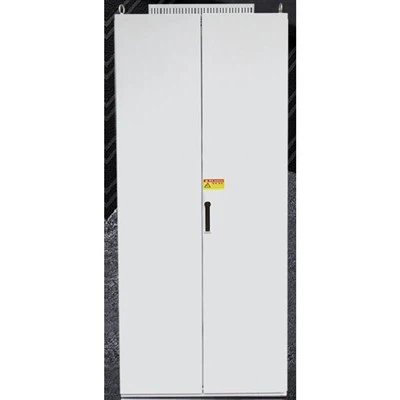
Let’s start with why standard pad-mounted substations are vulnerable in the first place. Most off-the-shelf units are built to meet baseline electrical codes, which rarely account for variable flood heights or water composition. A typical pad-mounted substation sits low to the ground, often with cable entry points near base level, vent grilles at the bottom of the enclosure, and internal components (circuit breakers, transformers, control panels) positioned just a few feet above grade. When floodwaters rise, those bottom vents become entry points for water and sediment, leading to corroded wiring, shorted circuits, or even catastrophic failure of the transformer core. Saltwater, common in coastal flood zones, adds an extra layer of risk—it accelerates rust and electrical conductivity, turning a minor water exposure into a permanent failure in a matter of days. Over my career, I’ve responded to too many emergency calls from clients in places like the Southeast U.S. and the Gulf Coast, where a 12-inch flash flood turned a $50,000 substation into scrap because it lacked basic flood protections. That’s why every project I work on now starts with a detailed flood risk assessment—not a one-size-f-all guess, but a site-specific analysis of historical flood data, FEMA flood zone maps, local drainage patterns, and even projected sea level rise for coastal sites. This assessment tells us how much flood protection a substation actually needs, and there’s no substitute for that step.
The first line of defense we deploy is elevating critical components, but not just any elevation—we pair it with smart enclosure design. The transformer, the single most expensive and critical part of a pad-mounted substation, is always elevated well above the 100-year flood level identified in our assessment. For example, in a FEMA Zone A (100-year flood hazard area) with a projected 3-foot flood height, we elevate the transformer 18 inches above that mark, accounting for wave surge and water displacement. But lifting the transformer alone isn’t enough—we have to make sure the entire enclosure is watertight at the points where water can sneak in. That means sealing cable entry points with high-grade, UV-resistant compression glands, not just silicone caulk that breaks down after a few years of exposure. We also replace standard bottom vent grilles with weatherproof, corrosion-resistant vented louvers that let air circulate for cooling but block water from flowing in, even during heavy rain. For sites in high-surge zones, we add a secondary outer seal around the entire base of the enclosure, made of EPDM rubber that expands to block gaps if water levels rise temporarily. One of our long-term clients in Houston has a substation installed using this design that survived Hurricane Harvey in 2017—while nearby substations went offline for weeks, theirs only had minor cosmetic damage and was back online within 48 hours. That’s the kind of result that turns a skeptical client into a repeat partner.
Next, we integrate passive flood barriers that work alongside elevation and sealing, for sites where even the most robust enclosure might face unexpected water exposure. One of my go-to solutions for low-lying sites is custom-fitted concrete plinths, built on-site to match the precise dimensions of the substation pad and elevated 6 inches above the surrounding ground grade. These plinths aren’t just poured concrete—we line the top surface with a layer of HDPE (high-density polyethylene) sheeting, which acts as a slip and waterproof barrier between the substation base and the concrete pad. That way, if water seeps under the plinth’s edges, it can’t pool between the substation and the concrete, where it would cause corrosion or pressure damage. For sites with a history of rising groundwater, we also install a perimeter French drain system around the substation pad, sloped to divert water away from the enclosure before it can reach the base. We’ve even adapted this system for coastal sites, adding a layer of gravel and geotextile fabric in the French drain to block saltwater sediment, which can clog drains over time and reduce their effectiveness. The key here is that these barriers are pre-engineered to the substation’s exact size, so there’s no messy on-site cutting or adjustments that can compromise their performance.
Active flood protection is another layer we add for sites with frequent flood events, where even passive measures might need backup. The most reliable active system we use is a submersible sump pump installed inside the substation enclosure, connected to a high-water sensor that triggers the pump automatically if water levels inside the enclosure reach 2 inches—well below the level that would damage components. The sump pump is sized to handle 150 gallons per minute, which is more than enough to remove water from even a heavy flash flood event, and we power it using a separate, dedicated circuit that doesn’t rely on the substation’s main transformer. That means even if the main power is out, the sump pump works off backup batteries we install alongside it. We also test these pumps quarterly as part of our post-installation maintenance package, because nothing is worse than a sump pump that fails when you need it most. For larger industrial sites with multiple substations, we integrate the sump pump system into a remote monitoring platform, so facility managers can receive real-time alerts on their phones or computers if the pump is running, indicating a flood event before it causes damage.
We can’t talk about flood protection without addressing saltwater, which is a unique threat to coastal and estuary sites. Saltwater’s high electrical conductivity means even a small amount can cause short circuits, and its corrosive properties eat through metal components much faster than fresh water. For sites that face saltwater exposure, we use corrosion-resistant materials throughout the substation enclosure: stainless steel fasteners instead of galvanized steel, aluminum alloy instead of standard steel for internal brackets, and a powder-coat finish that’s specifically formulated to resist salt and UV damage. We also replace standard insulating materials with cross-linked polyethylene (XLPE) insulation, which is more resistant to saltwater degradation than PVC. In some cases, for sites in high-salt zones, we even use hermetically sealed transformers, which are enclosed in airtight, pressurized casings that keep saltwater and moisture out completely. These transformers are more expensive upfront, but over a 20-year lifespan, they eliminate the need for costly corrosion repairs and reduce the risk of premature failure. One client in Miami opted for hermetically sealed transformers after two substations failed due to saltwater surge in 2018, and has had zero issues since then—they’ve since ordered three more units for new projects, which is the best validation a supplier can get.
Post-installation maintenance is the final piece of the puzzle, because even the best flood protection measures won’t work if they’re neglected. As a supplier, we don’t just drop a substation at a site and walk away—we offer a tailored maintenance program that includes annual inspections of all flood protection components. That means checking seal glands for cracks, testing sump pump functionality, clearing French drains of sediment, and inspecting enclosure vents for debris. We also provide clients with a detailed flood response manual that outlines step-by-step actions to take if a flood is predicted, from pre-activating backup power to documenting damage for insurance claims. In 2021, we worked with a client in Louisiana ahead of a predicted tropical storm—their maintenance team followed our manual, prepping all flood barriers and testing the sump pumps, and when the storm hit, the substation stayed online without a hitch. Compare that to a neighboring site that skipped maintenance and suffered over $100,000 in damage when a seal failed because it hadn’t been inspected in two years.
I know cost is always a factor for facility managers and engineers, and I get asked all the time if adding flood protection is worth the extra expense. Let’s do the math: a standard pad-mounted substation for a commercial site costs around $40,000-$60,000. Adding full flood protection features (elevation, sealed enclosures, sump pumps, corrosion-resistant materials) adds about 15-20% to that upfront cost. But the cost of a flood-damaged substation? It’s often 2-3 times the original cost, plus lost revenue from power outages that can last days or weeks. For a hospital or a data center, even an hour of downtime can cost tens of thousands of dollars. Over 10 years, the cost of flood protection is a small investment that eliminates massive risk. I’ve seen clients who tried to cut corners on flood protection end up paying for it in the long run, and those who took a proactive approach save money and headaches every time a storm rolls through.
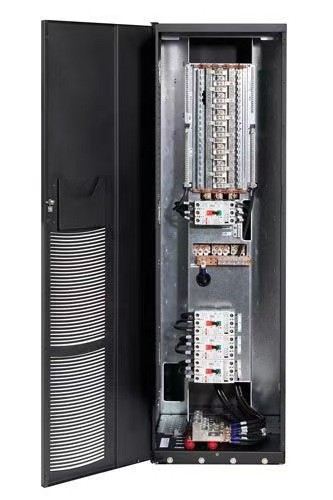
At the end of the day, flood protection for pad-mounted substations isn’t just about meeting codes—it’s about giving our clients peace of mind that their power will stay on, no matter what the weather brings. As a supplier, we’ve built our reputation on creating solutions that are both practical and durable, tailored to the unique needs of each site. If you’re planning a project in a flood-prone area, whether it’s a residential development in the Midwest, a coastal resort in Florida, or an industrial plant along the Gulf Coast, I’m here to help you design a substation that can handle whatever water comes its way. We don’t believe in one-size-f-all solutions, because every site has different flood risks, and every client has different needs. Let’s sit down, talk through your project, and figure out the right flood protection measures for you. I’m ready to help you build a substation that works as hard as you do, even in the toughest conditions.
Uninterruptible Power Supply References
- Federal Emergency Management Agency (FEMA). Flood Map Service Center: Flood Risk Assessment Guidelines for Electrical Infrastructure. U.S. Department of Homeland Security, 2022.
- IEEE Standard C57.12.71. IEEE Guide for the Design, Construction, and Maintenance of Pad-Mounted Equipment for Severe Environments. Institute of Electrical and Electronics Engineers, 2019.
- National Renewable Energy Laboratory (NREL). Resilient Electrical Infrastructure: Flood Mitigation Strategies for Distributed Energy Systems. U.S. Department of Energy, 2021.
- American Water Works Association (AWWA). Guidelines for Protecting Electrical Equipment from Freshwater and Saltwater Flood Damage. American Water Works Association, 2020.
- International Electrotechnical Commission (IEC) Standard 62271-202. High-Voltage Switchgear and Controlgear – Part 202: AC Metal-Enclosed Switchgear for Rated Voltages Above 1 kV Up to and Including 52 kV. International Electrotechnical Commission, 2018.
Yuanzhuo Electrical Equipment (Jiangsu) Co., Ltd.
We’re well-known as one of the leading pad mounted substation manufacturers and suppliers in China. We warmly welcome you to wholesale high quality pad mounted substation at competitive price from our factory. If you have any enquiry about cooperation, please feel free to email us.
Address: Group 8, Chengdong Village, Fucheng Sub-district Office, Funing County
E-mail: markcheng1358@126.com
WebSite: https://www.yzdlchina.com/
