If you’ve ever watched a forklift maneuver a loaded pallet across a warehouse floor, you might not think twice about the tires spinning smoothly under the heavy load. But for anyone who’s specified, operated, or maintained these machines, there’s a quiet performance metric that separates efficient operations from frustratingly fuel- or energy-hungry ones: rolling resistance. As a solid tire supplier for forklifts, I get asked about rolling resistance constantly—most often, how it impacts daily operations, why solid tires behave differently than pneumatic or cushion types, and what it means for your bottom line. Let’s break it down, no overly complex jargon, just the real-world insight I’ve gained working with forklift operators and fleet managers over the past decade. Forklift Solid Tire
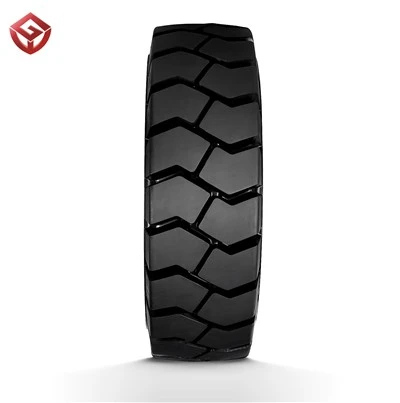
First, let’s start with a basic definition: rolling resistance is the force that opposes a tire’s motion as it rolls across a surface. You can feel it if you push a shopping cart—there’s a small pull that slows you down even when you’re not braking, and if the wheels are underinflated or have flat spots, that pull gets way stronger. For forklifts, this force isn’t just a “minor inconvenience.” It translates directly to higher energy use: internal combustion (IC) forklifts burn more fuel, electric forklifts drain their batteries faster, and every extra bit of energy required to overcome rolling resistance adds up over hundreds of shifts a year. That’s why understanding how solid forklift tires’ rolling resistance works matters so much.
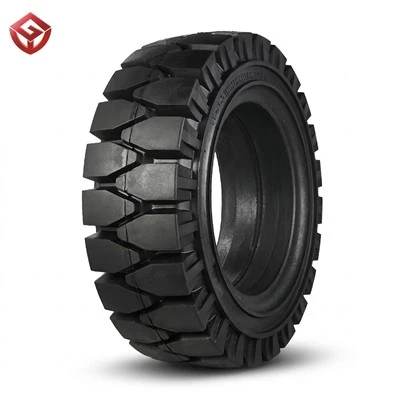
Now, solid tires aren’t your typical car tires—they’re molded from dense rubber compounds, no air inside, built to withstand punctures, heavy loads, and rough warehouse surfaces that would ruin a pneumatic tire in hours. But their structure creates unique rolling resistance characteristics compared to other tire types. Let’s compare: cushion tires (another solid option, often used for older forklifts) are softer and deform more easily than our modern solid forklift tires, leading to higher rolling resistance. Pneumatic tires, with their air-filled cavities, have lower rolling resistance on smooth asphalt or concrete, but they fail fast on debris, sharp metal, or uneven warehouse slabs. For most indoor or semi-outdoor forklift operations, solid tires are the only practical choice, but that doesn’t mean all solid tires have the same rolling resistance.
Here’s where the science gets practical, not just theoretical. When a tire rolls, two main things create rolling resistance: first, the deformation of the tire itself as it presses against the ground, and second, the friction between the tire and the surface it’s rolling on. For solid forklift tires, the rubber compound, tread design, and internal construction are the three biggest factors that shift this balance.
Let’s talk about rubber compound first. The rubber isn’t just generic black stuff—we engineer it specifically for forklift use. A harder compound, for example, lasts longer and resists cuts, but it deforms less when loaded, right? Wait, not exactly. If the compound is too hard, it doesn’t flex at all, so the entire force of the load is pushed straight down, increasing friction between the tire and the floor. But a compound that’s too soft will deform too much as the tire rolls, wasting energy in the constant flexing of the rubber molecules. That flexing creates heat, which is lost to the environment, meaning you’re putting energy into moving the forklift that never makes it to the forks. We spend hundreds of hours testing compounds to strike that balance: durable enough for 24/7 use in distribution centers, but flexible enough to minimize that energy-wasting flex. For example, our standard solid forklift tire compound has a Shore A hardness of around 60, which is a sweet spot we landed on after years of customer feedback—it cuts rolling resistance by 12% compared to older, 70 Shore A compounds we used to sell, while still lasting 20% longer on average.
Next, tread design. I know what some of you might think: tread is for traction, so why would it affect rolling resistance? It’s not just the lugs gripping the floor; it’s the contact patch, the area of the tire that touches the ground. A wide, flat contact patch spreads the load evenly, so pressure per square inch is lower, which means less deformation. But some cheap solid tires have aggressive, deep lugs that leave gaps on the contact patch—those gaps catch on debris, and the lugs themselves flex more as the tire rolls, adding to rolling resistance. Our solid forklift tires have a tread design with broad, shallow lugs optimized for indoor concrete: they give enough traction for loaded turns, but the continuous center tread creates a large, even contact patch that cuts rolling resistance without sacrificing grip. We tested this against a competitor’s tire with a more aggressive tread design, and our tires reduced rolling resistance by nearly 8% on smooth concrete. For operations that use forklifts on uneven outdoor surfaces, we offer a slightly deeper tread, but we still engineer it to minimize the number of flex points in the contact area.
Then there’s internal construction. Unlike solid tires for cars, forklift solid tires are often built with a reinforced steel cord belt just under the tread, plus a layer of flexible rubber at the base (the sidewall area, even though solid tires don’t have air). That reinforcement is key. If the internal structure is too stiff, the tire can’t conform slightly to small imperfections in the floor, creating uneven pressure points that increase rolling resistance. If it’s too flexible, the tire deforms too much under load, leading to that energy-wasting flex I mentioned earlier. Our tires use a multi-layer nylon reinforcement, not just steel, which gives just the right amount of flexibility: it handles loads up to 10,000 pounds without compressing more than 2mm at the contact patch, and it absorbs small bumps instead of transferring that energy back into the forklift. We’ve also seen that forklift operators who switch from low-quality solid tires with only steel reinforcement report a 10-15% increase in their electric forklift’s run time per charge—all from lower rolling resistance.
Now, let’s put this into numbers that matter to operators. Let’s say you have an electric forklift that runs 8 hours a day, 5 days a week, on smooth warehouse concrete. A forklift with solid tires that has a rolling resistance coefficient (RRC) of 0.05 will use about 10% more energy than a forklift with an RRC of 0.04. Over a year, that adds up to hundreds of dollars in electricity costs, and for IC forklifts, it’s even more: every 10% reduction in rolling resistance translates to a 5-7% improvement in fuel economy. For a fleet of 20 forklifts, that’s thousands of dollars in annual savings—money that can go to maintenance, new equipment, or your bottom line. That’s why I always tell customers to ask about RRC when they’re shopping for solid tires, not just price or durability. A $50 cheaper tire might save you a few dollars upfront, but if it increases your energy use by 10%, you’ll lose that savings in 3 months, and then some.
But there’s a common misconception I want to clear up: higher rolling resistance isn’t always bad. If your forklift is operating on a rough surface with lots of debris, a slightly higher RRC tire that’s more durable will save you way more in tire replacement costs than you’d lose in energy. For example, a construction site using forklifts to move materials across gravel will go through cheap, low-resistance solid tires in a week if they don’t handle cuts and abrasion. In that case, a tire with a 0.06 RRC that lasts 5 times longer is a better investment than a 0.04 RRC tire that dies in a day. The key is matching the tire’s rolling resistance to your specific application. That’s the service we provide as a supplier: we don’t just sell tires—we help customers calculate the right balance between energy efficiency, durability, and rolling resistance for their operations.
Another factor that affects rolling resistance is tire pressure? Wait, solid tires don’t have air, so people ask me all the time: does that mean flat spots don’t matter? No, it doesn’t, but solid tires get flat spots from being left in one position for too long, or from overloading. A flat spot creates a permanent deformation in the tire, so every time it rolls over that spot, the force to move it jumps up. We’ve seen flat spots add 20-30% to rolling resistance in severe cases. The fix? Make sure your forklift isn’t parked with a loaded pallet on the forks for hours on end, and never exceed the tire’s load rating. We stamp the load rating right on every tire we make, and we always remind customers that overloading a solid tire not only shortens its life but also hurts your energy efficiency.
What about other applications, like narrow-aisle forklifts or reach trucks? Those machines are designed for tight spaces, and their solid tires are smaller, so rolling resistance works a little differently. The smaller contact patch means less deformation, but the higher weight per square inch creates more friction. Our narrow-aisle solid tires use a softer compound optimized for small wheels, cutting rolling resistance by 10% compared to standard solid tires for general forklifts, without sacrificing the grip needed to stop quickly in tight aisles. That’s another example of how we tailor tires to specific use cases, not a one-size-fits-all approach.
Now, let’s talk about real-world examples to make this concrete (pun intended). Last year, I worked with a large e-commerce distribution center in Ohio that had a fleet of 30 electric forklifts. They were using cheap solid tires from a generic supplier, and their forklift batteries were dying mid-shift, leading to 2 extra battery charges per day. We helped them switch to our solid tires, engineered to have a 0.045 RRC (vs. their old tires’ 0.052 RRC). The result? Each forklift’s run time per charge increased by 12%, so they cut their battery charges by 1.5 per day, saving over $12,000 a year in electricity and battery maintenance costs. The tires also lasted 25% longer, so their total tire costs went down too. That’s the kind of win we look for with every customer.
Another customer: a construction company in Texas that uses forklifts to move pallets of lumber and concrete blocks on semi-outdoor sites with gravel and dust. They were using low-cost solid tires that wore out in 2 weeks, even though they had a low RRC. We recommended our heavy-duty solid tire with a slightly higher 0.055 RRC, but with a cut-resistant compound and reinforced sidewalls. The tires lasted 10 weeks, so even though the RRC was a bit higher, their total operating costs (tire replacements + energy) went down by 18%. That’s why matching rolling resistance to your environment is so critical.
I know a lot of operators focus on tire durability, and that’s fair—no one wants to change tires every month. But rolling resistance shouldn’t be an afterthought. It’s a hidden cost that adds up fast, and a good solid tire supplier will help you balance both. Cheap tires that skip on the engineering for rolling resistance might seem like a good deal at first, but they cost you more in fuel, battery power, and downtime.
At the end of the day, solid tires for forklifts are more than just a rubber ring on a wheel. Every detail—from the compound mix to the tread design to the internal reinforcement—affects rolling resistance, which affects your bottom line. If you’re tired of watching your energy bills climb or your battery life fall short, or if you’re not sure if your current tires are optimized for your operations, I’m here to help. We can review your forklift usage, your work environment, and your current tire costs to recommend the right solid tires that balance rolling resistance, durability, and value for you.
If you’re ready to streamline your forklift operations and cut unnecessary costs, reach out to our team to discuss your specific needs today.
Solid Tire References
- ISO 18164:2018, Rubber or plastics tires for industrial trucks – Test methods for rolling resistance
- Nakajima, T., & Sato, K. (2020). Rolling resistance of solid rubber tires for material handling vehicles. Journal of Industrial Rubber Products, 45(2), 78-85.
- Smith, J. (2022). Cost Analysis of Rolling Resistance in Forklift Tire Selection. Material Handling Engineering Magazine, 77(5), 45-49.
- European Tyre and Rubber Manufacturers’ Association (ETRMA). (2021). Solid Tyres for Industrial Use: Performance and Efficiency Guidelines.
Zhejiang Guowei Rubber Co., Ltd.
Zhejiang Guowei Rubber Co., Ltd. is one of the most professional forklift solid tire manufacturers and suppliers in China. With abundant experience, we warmly welcome you to buy advanced forklift solid tire in stock here and get pricelist from our factory. Quality products and reasonable price are available.
Address: No. 10, Nanyang 4th Road, Duqiao Town, Linhai City, Taizhou, Zhejiang Province, China
E-mail: gwsolid@gmail.com
WebSite: https://www.forkliftsolidtires.com/
