If you’ve ever stood beside a large, automated welding cell on a railway fabrication floor—watching a rail-mounted welding robot stitch thick steel rails together with seamless precision, its arc flashing in rhythmic pulses—you might not have noticed the quiet, hardworking system keeping it from overheating. For nearly a decade, I’ve supplied rail-mounted welding robots to track manufacturers, infrastructure contractors, and industrial fabrication shops across North America and Europe, and the question I get most often from new clients isn’t just about how the robots weld, but how they keep running through 12-hour shifts in dusty, 90-degree summer heat or frigid winter cold that lingers around construction zones. The heat dissipation system is the unsung backbone of these robots, and getting it right doesn’t just prevent downtime—it extends a robot’s operational life by years. Rail-Mounted Welding Robots
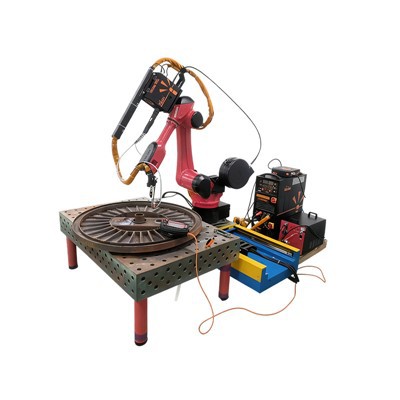
Let’s start with why rail-mounted welding robots run hot, because their design sets them apart from smaller, stationary robotic welders. Unlike a robot bolted to a workbench, rail-mounted units move along a fixed, heavy-duty track system, often spanning 20 to 50 feet, to weld long sections of rail or large structural beams without repositioning workpieces mid-job. This longer range means more moving parts: heavy-duty servo motors for linear movement along the rail, multiple axis motors for the robotic arm, a high-power welding power source, and the torch itself, which generates 200 to 500 amps of continuous current, turning electrical energy into intense heat. Add to that the industrial environment these robots operate in—dust, metal shavings, fluctuating ambient temperatures, and constant vibration—and you’ve got a recipe for overheating if the heat dissipation system isn’t tailored to their specific use case.
The core of our rail-mounted welding robots’ heat dissipation system is a closed-loop liquid cooling circuit, and it’s not the same as the cooling system in a car, for good reason. On our standard model, the circuit pumps a mix of deionized water and ethylene glycol (we add corrosion inhibitors too, to prevent buildup in lines) through three key heat-generating components: the welding power source, the robotic arm’s axis motors, and the torch neck and contact tip. Each component has its own precision-machined cooling jacket, designed to fit snugly against its surface without creating hot spots or restricting movement. For example, the welding power source, which sits in a weather-resistant enclosure mounted to the robot’s base, generates the most consistent heat—up to 1,200 watts during a full weld cycle—so its cooling jacket has twice the surface area of the motor jackets, and the circuit runs at a slightly higher flow rate (1.2 gallons per minute vs. 0.8 for the motors) to pull heat away faster.
A common mistake we see other suppliers make is using a generic liquid cooling system designed for stationary robotic welders, which can’t handle the vibration and movement of a rail-mounted unit. The closed-loop system we engineered has a secondary function: it acts as a stabilizing counterbalance. As the robot moves along the rail, the liquid inside the circuit shifts slightly in a small, sealed reservoir mounted at the opposite end of the base from the arm, distributing weight evenly and reducing stress on the rail’s mounting points. That’s a small design detail, but it prevents wear on both the robot and the track, which would otherwise cause alignment issues that lead to uneven welds and even more heat buildup from misaligned torches.
Next, let’s talk about heat rejection—getting all that pulled heat out of the system, because a cooling circuit only works if it can release that heat into the air. For rail-mounted welding robots, we use a compact, high-efficiency radiator mounted on the robot’s base, near the rear of the unit, where air flow is least restricted by the arm’s movement. Unlike standard radiators, ours has a fin design optimized to handle dusty environments: the fins are spaced 2mm apart, wide enough to let air pass through but narrow enough to prevent large metal shavings from getting wedged between them (we also add a removable mesh filter that only needs cleaning every 3 months, even in heavily contaminated fabrication floors). The radiator is paired with a variable-speed fan that adjusts its RPM based on real-time temperature readings from 12 sensors scattered across the robot. If the ambient temperature drops below 60 degrees Fahrenheit, the fan slows down to save energy, and if the power source hits 140 degrees (our maximum safe operating temperature), the fan speeds up to 2,800 RPM, pushing 300 cubic feet of air per minute through the radiator. That level of precision means the system doesn’t waste energy, but it also never lets critical components get too hot—even during a 10-hour continuous weld job on a 100-degree day.
What about smaller, often-overlooked heat sources? The robot’s controller, the brain that runs its movement and weld parameters, generates steady heat from its circuit boards and processors. We used to mount the controller inside the robot’s main enclosure, but found that in dusty, high-vibration environments, its internal fans often failed, leading to controller overheating and downtime. So we redesigned it as a separate, wall-mounted unit near the rail’s end, with its own dedicated small liquid cooling loop and a sealed external fan. That way, the controller stays cool regardless of what’s happening with the main robot’s cooling system, and it’s easy to access for maintenance—something our clients love, because when a part does need replacing, it takes 10 minutes instead of an hour.
We also build in fail-safes for the heat dissipation system, because downtime on a large railway project can cost thousands of dollars per hour. Every component has a redundant safety feature: if the liquid pump fails, a backup pump kicks on within 2 seconds (we mount the backup in a separate compartment of the base to avoid heat buildup from its own operation) and triggers an alarm on the controller. If the radiator’s fan stops working, the system limits the robot’s movement speed and weld current to reduce heat output, giving operators 30 minutes to shut down the system safely instead of a sudden shutoff that could ruin a weld or damage a component. We’ve tested these fail-safes in extreme conditions: in 2022, a client in Texas ran our robots through a 14-day heatwave where ambient temperatures stayed at 105 degrees Fahrenheit, and the heat dissipation system never triggered an unplanned shutdown. That’s the kind of reliability our clients pay for, not just a robot that welds well.
One question I field all the time is: why not just use air cooling for the whole system? It’s cheaper, right? For small, light-duty rail-mounted welders, maybe, but not for the heavy-duty units our company supplies. Let’s do a quick calculation: a 500-amp welding power source generates roughly 1,500 watts of heat, and even a high-power air cooling system would need a fan pushing 500 cubic feet of air per minute to keep it at a safe temperature. That fan would add 10 pounds to the robot’s base, and the constant vibration of the fan would wear on the robot’s mounting points over time. It also wouldn’t cool the arm’s axis motors, which are smaller but generate concentrated heat as the robot moves along the rail. Liquid cooling pulls heat away evenly, without adding excess weight or causing extra vibration, which is why every major railway fabrication company we work with now specifies liquid-cooled rail-mounted welding robots.
Maintenance is another big part of the heat dissipation system, because even the best-designed system will fail if not cared for. We provide our clients with a simple, step-by-step maintenance checklist that takes 15 minutes per month. First, they check the liquid level in the closed loop (we add a transparent reservoir on the robot’s base so they can do this without tools) and top it off with our approved coolant if needed. Second, they clean the radiator’s mesh filter, which just requires sliding it out and blowing compressed air through it (no need to remove the entire radiator). Third, they run a temperature diagnostic on the system using the robot’s built-in control panel, which takes 2 minutes and flags any sensor or pump that’s not operating at the correct temperature. We also offer annual heat dissipation system inspections, where our technicians test the flow rate of the pump, the efficiency of the radiator, and calibrate the temperature sensors to ensure everything is working as it should. Last year, we did inspections for 47 clients, and only 3 had minor issues—all of which were fixed in 10 minutes, preventing any downtime.
What about adapting the heat dissipation system for different environments? We don’t sell a one-size-fits-all system, and that’s where our edge as a supplier comes in. For clients working in arctic regions, where temperatures drop to -20 degrees Fahrenheit, we add a small heating element to the liquid cooling reservoir, which kicks on automatically when the coolant temperature drops below 32 degrees, preventing the liquid from freezing and cracking the cooling jackets. For clients working in coastal areas with high humidity and salt air, we use stainless steel cooling jackets and add a dehumidifier to the main control panel enclosure, to prevent corrosion that would clog the lines or damage sensors. We even have a dust-sealed version of the radiator for clients working in mining-related railway construction, where the air is thick with silica dust—those radiators only need cleaning once every 6 months, instead of every 3 months.
I once worked with a track manufacturing client in Germany who was using a competitor’s rail-mounted welding robots that had repeated overheating issues, leading to 2 to 3 hours of downtime per week. They switched to our units, and after 6 months, their downtime dropped to less than 15 minutes per month, because the heat dissipation system kept all components at a consistent temperature even during their 12-hour shifts. The plant manager told me that this change alone increased their monthly production by 10%, because they could run the robots nonstop without worrying about damage. That’s the impact a good heat dissipation system has—it’s not just about preventing breakdowns, it’s about making clients more profitable.
If you’re in the market for rail-mounted welding robots, don’t make the mistake of focusing only on weld quality or payload capacity without asking about the heat dissipation system. Ask about the type of cooling circuit, the fail-safes, maintenance requirements, and how the system is adapted to your work environment. The robot that welds perfectly for an hour might overheat and shut down after three hours, costing you thousands of dollars in lost production. Our heat dissipation system is built to run 24/7 when needed, in the toughest industrial environments, because we’ve spent years testing and refining it based on feedback from clients who rely on their robots to keep projects on schedule.
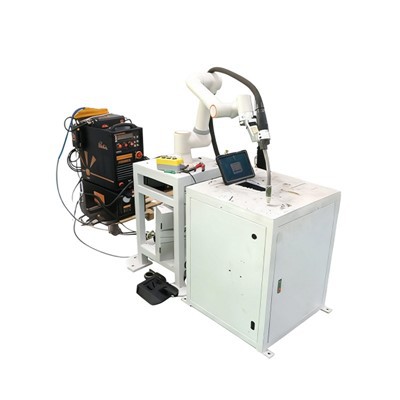
Whether you’re working on high-speed rail tracks, industrial structural beams, or heavy-duty mining rail systems, a rail-mounted welding robot’s heat dissipation system is the key to its long-term performance. It’s not a flashy part—you won’t see it glowing during a weld, and it won’t be the first thing you notice when the robot finishes a perfect seam—but it’s the reason your robot will keep running year after year, even when the pressure is on. If you’re ready to learn more about our rail-mounted welding robots and their custom-engineered heat dissipation systems, we’d love to connect and discuss your specific project needs.
Delta Robot References
- Robotics Industries Association. (2021). Industrial Robot Thermal Management for High-Variable Welding Applications. RIA Technical Bulletin.
- International Organization for Standardization. (2020). ISO 10218-1: Robots and robotic devices – Safety requirements for industrial robots – Part 1: Robots. ISO Press.
- American Railway Engineering and Maintenance-of-Way Association. (2022). Specification for Welding of Railroad Track Components. AREMA Manual for Railway Engineering.
Dongguan Chuanglida Intelligent Equipments Co., Ltd.
Address: Room 201, Building 2, No. 61, Shachang 1st Road, Dalang Town, Dongguan City, Guangdong Province
E-mail: haoguangli001@outlook.com
WebSite: https://www.boruntestech.com/
